
ARPA Insight Stories:
THE HEALTH OF A CITY BEGINS AT HOME
Preserving Dignity, Stabilizing Neighborhoods
While contending with the challenges of the COVID-19 pandemic, families across Baltimore were also faced with longstanding housing vulnerabilities: aging roofs, unsafe stairways, outdated electrical systems, and inaccessible bathrooms that made daily life difficult, especially for seniors and residents with disabilities.
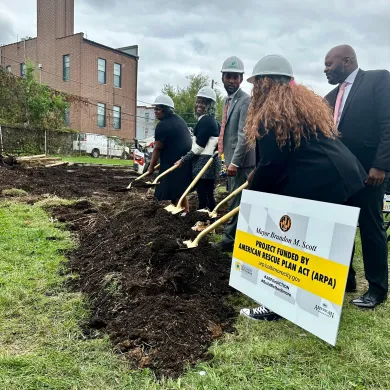
Through the American Rescue Plan Act (ARPA), Baltimore City invested directly in repair solutions that keep residents safe and housed. In September 2022, Mayor Brandon M. Scott announced over $13 million in ARPA grants to 15 nonprofit organizations dedicated to community development.
“…[W]e are deeply committed to supporting organizations that provide critical services in and for communities throughout Baltimore," said Mayor Brandon M. Scott in 2022. "Baltimore’s renaissance is contingent upon the incredible work our nonprofit community does day in and day out on behalf of our residents. We are proud to leverage ARPA funds to advance our shared vision for a Baltimore that ensures the safety, economic opportunity, and social support for all Baltimoreans regardless of zip code, ethnicity, or sexual identity."
Among the grantees leading transformative home repair efforts are Southeast Community Development Corporation (Southeast CDC): Restoring Safety and Independence in McElderry Park; Neighborhood Housing Services of Baltimore (NHS): Preserving Legacy Homeownership; Green & Healthy Homes Initiative (GHHI):300 Repairs, 1,200 Baltimoreans; and Rebuilding Together Baltimore: “Shelter Is a Basic Human Need.”
Click the links above to read the these ARPA Impact stories with quotes from the Baltimore families.
Continuing the Work | Illuminating the Shadow of Redlining
Baltimore’s housing inequities are not new. In the 1930s, the federal Home Owners’ Loan Corporation labeled many urban neighborhoods as “high risk” for lending, a practice known as redlining that disproportionately affected communities of color.
Nearly a century later, the effects persist in the form of wealth gaps, housing disinvestment, and disparities in health and opportunity.
ARPA funding is helping preserve legacy homeowners, which helps protect intergenerational wealth. Stabilizing blocks reduce vacancy. Keeping seniors in place maintains community continuity.
When homes stay safe and occupied, families avoid destabilizing moves, school disruptions decrease, community ties remain strong, and affordable housing is preserved.